NEWS & outreach
EFFECTIVE ESTUARY RESTORATION Symposium
MAY 2026: “Considering birds during fish habitat restoration — Restoring ecological functions for multi-species benefits”.
Part of a virtual series of Effective Estuary Restoration Symposiums, hosted by the Pacific Marine and Estuarine Fish Habitat Partnership and funded by the U.S. Fish & Wildlife Service.
INDIGENOUS SOvereignty & collaborative Science
JAN 2026: A web resource offering guidance on how collaborative conservation projects can align with and affirm Indigenous sovereignty and rights to self-determination.
A collection of modules, case studies, and videos developed in response to a need expressed by natural resource managers and project teams, seeking to better understand Indigenous sovereignty and what it means for collaborative conservation.
Read more about the purpose of the collection here.

Surveying birds in the Chihuahuan Desert Grasslands. Photo by R. Rylander
CORNELL LAB OF ORNITHOlogy
DEC 2025: A new study published in the journal Ornithological Applications shows how conservation organizations are using data from birdwatchers to pinpoint opportunities to reverse population declines.
The study, led by researchers from nine Migratory Bird Joint Ventures (cooperative, regional partnerships of federal and state agencies, Tribes, and non-governmental organizations working together to support bird conservation), presents case studies of conservation organizations using data from birdwatchers to select priority species, track seasonal use of habitats, identify bird hotspots, and monitor populations at regional scales.
Featuring research from our paper: “Leveraging eBird data products to inform regional bird conservation priorities and objectives”.
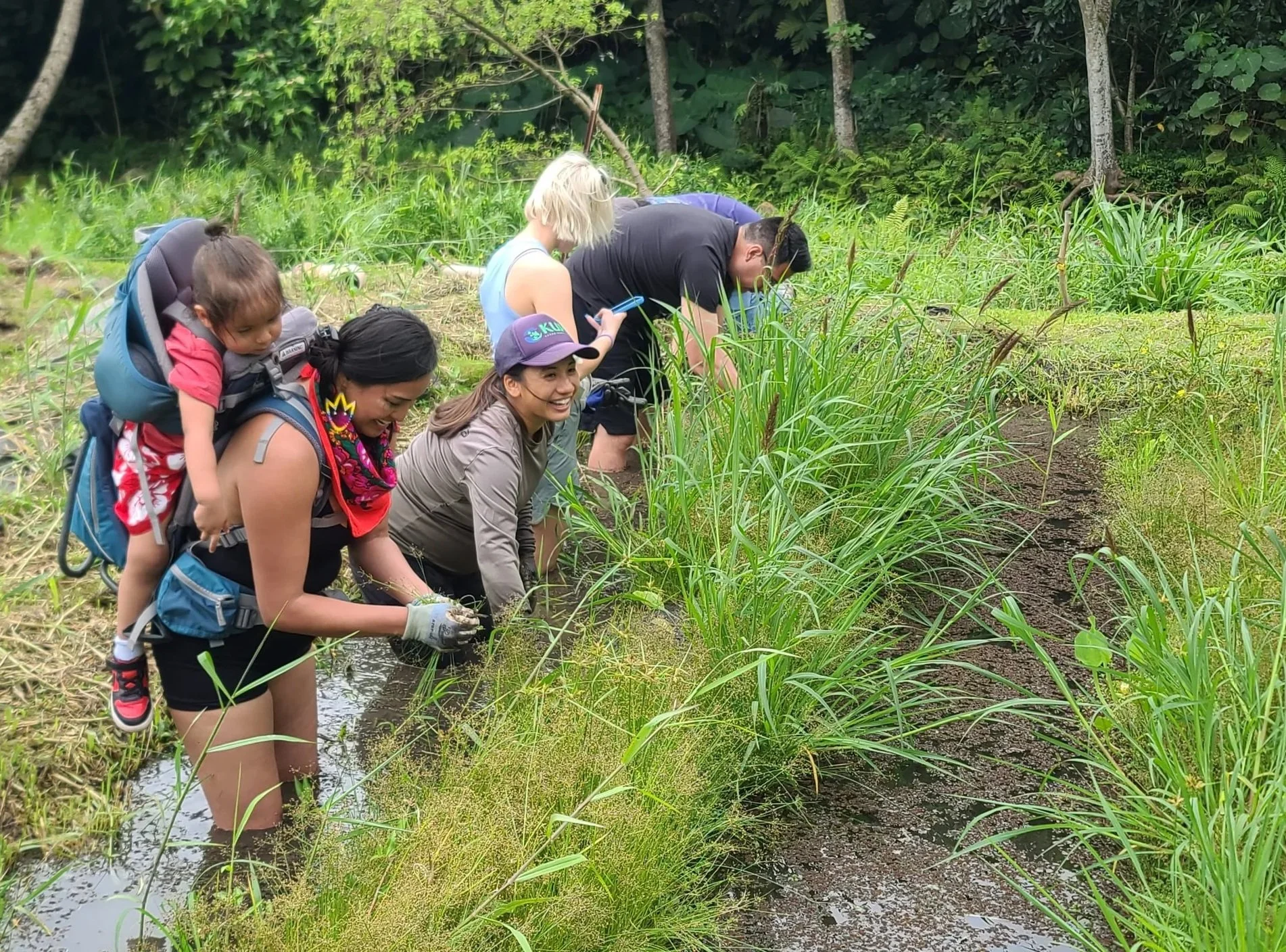
Multiple generations help in a lo‘i kalo (taro field) at He‘eia National Estuarine Research Reserve.
INDIGENOUS KNOWLEDGE WEB RESOURCE
OCT 2025: A web resource offering guidance for non-Indigenous conservation practitioners working with Indigenous Nations and organizations to share knowledge in an informed, respectful way, and to support the co-management of coastal lands and waters.
For anyone seeking guidance in such work, this web resource offers lessons, recommendations, and stories from ongoing collaborations.
Based on a project funded by the NERRS Science Collaborative and led by the Heʻeia Reserve and Pacific Birds Habitat Joint Venture.
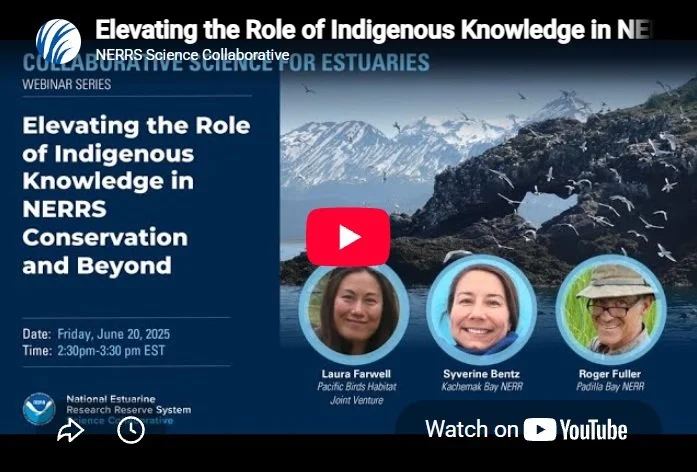
Elevating the Role of Indigenous Knowledge in coastal Conservation and Beyond
JUN 2025: In this webinar, a National Estuarine Research Reserve System (NERRS) project team shares applications and existing frameworks for weaving together conventional science and Indigenous Knowledge, research, and cultural values to enhance stewardship of estuarine habitats and coastal watersheds.
View webinar summary resources.
Based on a project funded by the NERRS Science Collaborative .

In April 2024, National Estuarine Research Reserve staff from Alaska, Washington, Oregon, and Hawaiʻi worked together with Pacific Birds Habitat Joint Venture to convene the largest gathering of Indigenous leaders and community partners in the history of the Reserve System.
Re-envisioning Conservation science
APR 2024: We had the opportunity to convene 41 people from different Tribal Nations, National Estuarine Research Reserves (NERRs), and partner organizations at Hawaii’s He’eia NERR. The goal? To explore the integration of western and Indigenous Knowledge systems in the conservation of migratory birds, and the habitats they rely on for survival.
More than that, it was a rare opportunity to talk story and share cultures, histories, and experiences from across the Pacific. Learn more in this blog from the National Estuarine Research Reserve Association.
Just released: Pacific Birds Coastal Wetlands Strategic Plan
MAY 2024: The Pacific Birds Coastal Wetlands Strategic Plan is out now!
We’re excited to launch this plan that will help guide coastal wetlands conservation in the North Pacific Flyway. The goal of the plan is to generate momentum around a shared path forward to conserve healthy coastal wetlands for the benefit of birds, other wildlife, and people.
The plan addresses focal habitats including: tidal wetlands, eelgrass meadows, freshwater wetlands, and bird-friendly working lands & waters. It also identifies 35 top-priority species in the region. Take a look:


American ornithological society Elective member
AUG 2023: Honored to be selected as part of the 2023 AOS Class of Elective Members. Membership is bestowed in recognition of significant contributions to ornithology and service to the AOS.
What an honor to be included on this list! Looking forward to many more years of work for birds with AOS.

Pacific birds habitat joint venture
MAY 2022: Thrilled to join the Pacific Birds team, as their Conservation Coordinator for Coastal Habitats. I will work with existing partners, cultivate new partnerships, and collaborate with Pacific Birds board and staff to advance coastal habitat conservation and management, and help sustain bird populations from northern California to Alaska.
I look forward to working closely with partners to facilitate meaningful, on-the-ground conservation to catalyze positive conservation outcomes for Pacific Coastal birds.

launch of the climate atlas
NOV 2021: The Climate Atlas, a publicly accessible, user-friendly and first-of-its-kind online mapping tool gives policy makers, regulators, and advocates clear, understandable, and visual information about the climate, biodiversity, carbon and related characteristics of public lands in the U.S., and help prioritizing new conservation actions.
“The Climate Atlas comes at a critical phase of decision making for how the U.S. will achieve the Biden Administration’s America the Beautiful initiative and address the global and national challenges of climate change and protect the health and diversity of nature,” said Danielle Murray, senior legal and policy director at Conservation Lands Foundation. “Public lands offer the greatest opportunity for federal action and we’ve built what we believe will be an immensely valuable tool and game-changer in how people understand their benefits.”
Dominion and Duke Energy abandon Atlantic Coast Pipeline
JUL 2020: It took six years of relentless work, strategy, and litigation from the Southern Environmental Law Center and clients—but with its official cancellation, the drawbacks of this project finally caught up with it.
This is a victory for all communities and natural areas in the path of the pipeline—countless farms, rugged national forests, thousands of rivers and streams, and historic African-American and Native American communities.

Dr. Brina Kessel (pictured left), with George Schaller, Don MacLeod, Mardy Murie and Olaus Murie at Last Lake and the Sheenjek River, Brooks Range, Alaska, in 1956.
2020 Kessel Fellowship for ornithological research
Honored to receive one of three inaugural 2020 Kessel Fellowships* for early career scientists, from the American Ornithological Society.
“Breeding passerine response to climate-driven expansion of shrubs and trees in the Alaskan subarctic”
*Made possible through a generous bequest by Dr. Brina Kessel, a pioneering American ornithologist.

nasA earth observatory image of the daY
JUN 4, 2020: Featuring research from our recent paper in Remote Sensing of Environment:
“Temperatures Predict Bird Biodiversity”
Small birds prefer winter landscapes that have larger thermal differences, likely because they offer more opportunities to find refuge from the cold.
NASA Landsat science video
APR 2020: Featuring research from our recent paper in Remote Sensing of Environment:
“Getting a Bird’s-Eye View of Biodiversity with Landsat”

the revelator
An initiative of the Center for Biological Diversity
OCT 2020: “We’re Just Starting to Learn How Fracking Harms Wildlife”
Mounting evidence proves that natural-gas and oil extraction threatens wildlife and ecosystems — much as it harms human health.
Featuring research from our paper in The Condor.

Compact for faculty diversity
OCT 2019: Honored to walk in the 2019 Institute on Teaching and Mentoring Graduation Recognition Ceremony, as a Southern Regional Education Board Dissertation Fellow.
The Compact for Faculty Diversity Institute is the largest gathering of minority PhD scholars in the U.S. The goal of the institute is to provide a safe environment for doctoral scholars to share insights and survival tips for success in grad school, build community among themselves, enrich their research and teaching strategies, and give scholars skills that will serve them in academia.

wildlife.org
The Wildlife Society
JUN 2019: “Shale Gas Infrastructure a Mixed Bag for Songbirds”
Featuring research from our paper in The Condor.

the highlands voice
West Virginia Highlands Conservatory Newsletter
NOV 2016: Featuring research from our paper in Biological Conservation:
“Unconventional Shale Gas Development Alters Forest Songbird Communities”

West virginia university 3-minute thesis Grand finale
APR 2016: Honored to receive 1st Place Award in WVU’s annual, campus-wide three-minute thesis competition!
“Songbird Response to Marcellus Shale Gas Development in the Central Appalachian Mountains”

deutschlandradio
German Public Radio
AUG 2015: Featuring research from our paper in Biological Conservation:

welcome to subirdia
Sharing our Neighborhoods with Wrens, Robins, Woodpeckers, and Other Wildlife
J. M. Marzluff. 2014. Yale University Press, New Haven, CT.
“Chapter 3: A Child’s Question” (pp.44-49)
Featuring research from our paper in Biological Conservation.